
 Skillfora Team
August 13, 2026
Skillfora Team
August 13, 2026
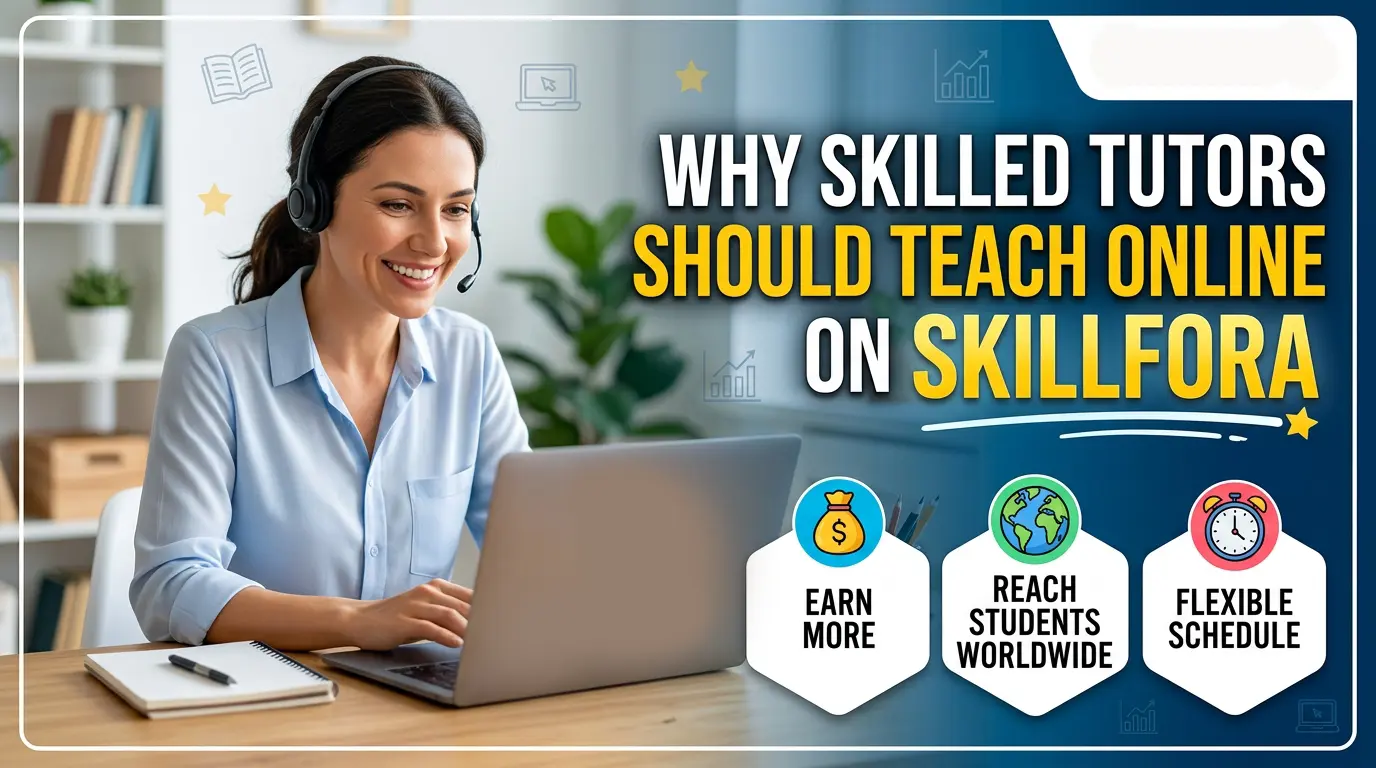
If you have real, hard-won expertise in a digital skill — coding, design, digital marketing, writing, data, or anything else people are actively trying to learn — there is a straightforward way to turn that knowledge into teaching income without building a media production business first. You do not need a camera rig, editing software, or a script for a twelve-hour course before you earn a single dollar. You need a topic, a schedule, and a willingness to get on a live video call with one student at a time. That is the model Skillfora is built around, and it is worth understanding why it works differently than the pre-recorded course platforms most people think of first.
Skillfora is launching first in Pakistan, which means tutors joining now are getting in early — ahead of the platform's teacher base, with more room to be found and to shape which subjects become well-represented from the start.
Building a traditional pre-recorded course is a project before it is an income source. You have to outline a full curriculum, write scripts, record hours of video, edit it, and hope it sells once it is finally published — often weeks or months of unpaid work before any student ever sees it. Live 1-on-1 teaching flips that order. You set up a profile describing what you teach, define the sessions you are willing to run, and you can be in front of a paying student as soon as someone books. There is no inventory to produce in advance. Your time and expertise are the product, delivered directly, session by session.
This matters most for people who have the knowledge but not the time or interest to become a video producer on top of their actual skill. A working developer, designer, or marketer can start teaching around an existing job or freelance schedule, without treating course creation as a second full-time project.
Once you are approved as a tutor, you have two complementary ways to structure your teaching. You can accept individually booked 1-on-1 sessions, where a student schedules time with you directly for a single lesson or a quick help session. Or you can build a lesson pack — a structured set of sessions around a specific topic, with a defined number of sessions students commit to up front, so you and the student both know the shape of the learning journey from the start rather than negotiating it session by session.
Sessions themselves happen over live video, one tutor and one student, with optional cloud recording so the student can review the lesson afterward. That combination — live delivery with a recorded record — gives you the real-time teaching experience without losing the reusability that recorded content offers. You are not choosing between "live" and "recorded" as two separate business models; a single live session can serve both purposes at once.
Every tutor on Skillfora has a public profile page: your background, the subjects you teach, and how students can book time with you. Unlike a one-off gig on a generic freelance marketplace, this profile persists and accumulates over time. Every session you run, every returning student, every new subject you add builds a more complete picture of you as a teacher in that specific skill. Over months, that becomes a genuine personal teaching brand — something a resume line or a single freelance listing does not give you. Students searching for help in your subject area find you specifically, not a generic category page.
Not every subject-matter expert enjoys this format, and that is worth being honest about before you start. The tutors who thrive here tend to have two things in common. First, real depth in a digital skill: they have actually built the products, run the campaigns, or shipped the code they are teaching, not just studied it abstractly. Second, and just as important, they genuinely enjoy explaining things to one specific person and adjusting on the fly — slowing down when a concept does not land, jumping ahead when a student already gets it, answering the tangent question that would never fit into a fixed script. If you like presenting a polished, unchanging talk to a room, a pre-recorded course format may suit you better. If you like the back-and-forth of actually working with someone until they understand it, live 1-on-1 teaching is the format built for you.
The single biggest difference between live 1-on-1 teaching and any pre-recorded format is feedback. When you upload a course video, you publish it and then wait — you rarely know in the moment whether a student is confused, bored, or already ahead of you. In a live 1-on-1 session, you see it immediately. You can ask a question and hear the answer. You can watch someone's screen while they attempt something and correct course before a small misunderstanding turns into a wasted hour. That direct, real-time relationship is what makes 1-on-1 teaching genuinely effective, not just convenient. It is also, for many tutors, simply more rewarding: you get to watch a specific person's understanding click into place, session after session, rather than releasing content and hoping it works for a faceless audience.
If you have a digital skill worth teaching and you would rather start working with real students this week than spend months producing a course, live 1-on-1 tutoring is the more direct path. Set your own schedule, build lesson packs around the topics you know best, and grow a teaching profile that represents your actual expertise. When you are ready, you can apply to become a teacher on Skillfora and start setting up your profile and availability.