
 Skillfora Team
August 13, 2026
Skillfora Team
August 13, 2026
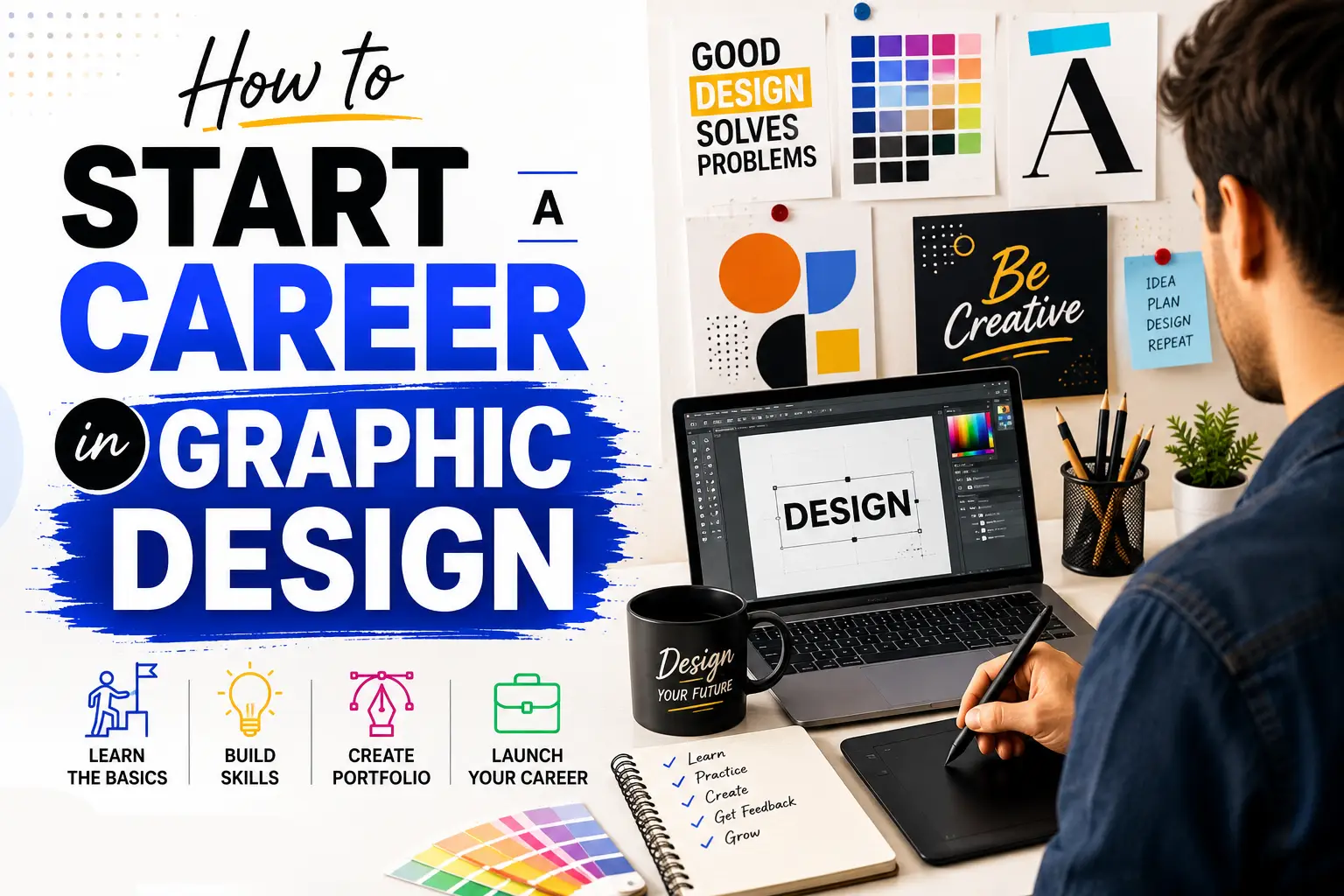
Graphic design is one of the more approachable creative careers to break into, precisely because so much of it can be learned outside a traditional classroom. That doesn't mean it's easy - it means the path is more about deliberate practice and building proof of your skills than it is about checking boxes. If you're starting from zero, here's a realistic roadmap for how to move from curious beginner to someone who can take on real design work.
Before you touch any software, it helps to understand the principles that make a design work in the first place. These fundamentals apply whether you're designing a logo, a slide deck, or a social media post, and they're what separate an intentional design from one that just happens to look okay.
These concepts are taught in countless free and paid resources, but understanding them intellectually is only step one. You need to practice applying them to actual layouts, over and over, before they become instinct.
Once you understand the "why" behind good design, you'll need software to execute it. The industry-standard toolkit has traditionally been Adobe's Creative Suite:
In recent years, Figma has become a popular alternative and complement to Adobe's tools, especially for web design, app interfaces, and collaborative projects, since it runs in the browser and makes it easy for multiple people to work on the same file at once. You don't need to master every one of these tools before calling yourself a designer - most professionals lean heavily on one or two, depending on their specialization, and pick up others as projects require them.
"Graphic design" is a broad umbrella, and most working designers eventually gravitate toward a specific niche. Knowing the common paths early can help you focus your learning:
You don't have to pick a lane immediately. Many beginners try a bit of everything in their first year or two before noticing what they enjoy most and what kind of work they're naturally drawn to.
Unlike some professions, graphic design doesn't require a degree or certification to get hired or land clients. What matters far more is a portfolio that demonstrates you can actually solve design problems. A strong portfolio, even a small one, usually beats a design diploma with nothing to show for it.
If you're starting with no professional experience, here's how most beginners build their first body of work:
Aim for quality over quantity. Five polished, well-explained pieces that show your thinking process will do more for you than twenty rushed ones.
Once you have a handful of pieces you're proud of, you can start looking for real opportunities. Most beginners find their footing through a mix of these approaches:
Be realistic about the timeline. Design skill and a client base both build gradually, through repetition and feedback, not overnight.
Self-teaching works, but it's slow going when you're not sure what to focus on next or why a piece of your work isn't landing. Getting feedback from someone who already works in the field can save you months of trial and error - pointing out, for example, that your typography choices are undermining an otherwise solid layout, or that your portfolio needs more variety before you start pitching clients.
If you'd like that kind of one-on-one direction, Skillfora's Graphic & Creative Design subject page connects you with tutors who can walk through fundamentals, tool workflows, and portfolio critiques tailored to where you are right now. You can also browse Skillfora's lesson packs to find a format - whether that's a single session or a structured series - that fits how you like to learn. Starting a graphic design career is a gradual process, but with the right fundamentals, consistent practice, and a bit of guidance, it's one you can absolutely work your way into.